THE LEAP LABS ENGAGES WITH IMPEL, A TAMPA FLORIDA STARTUP.

Learn more

App Design

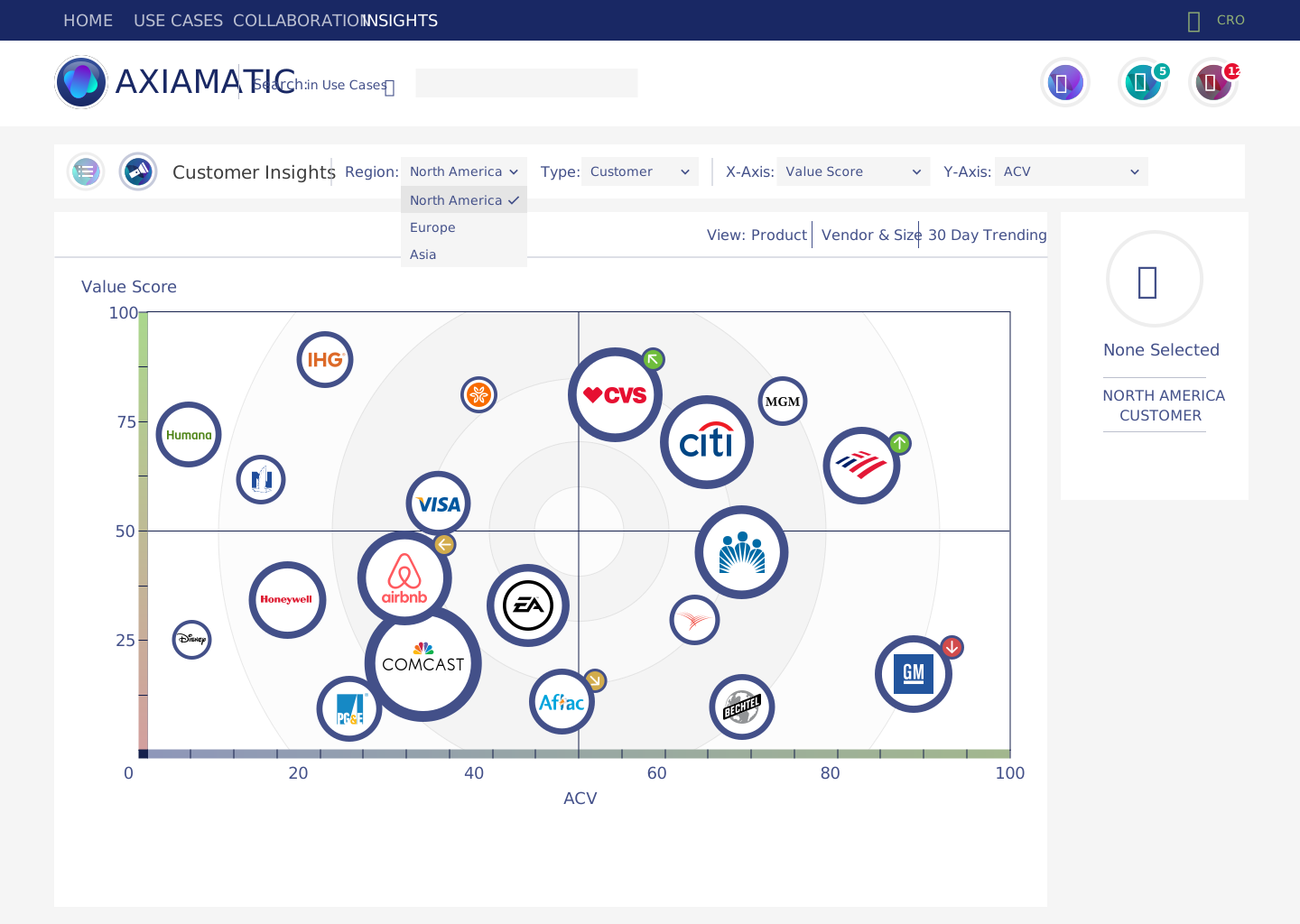
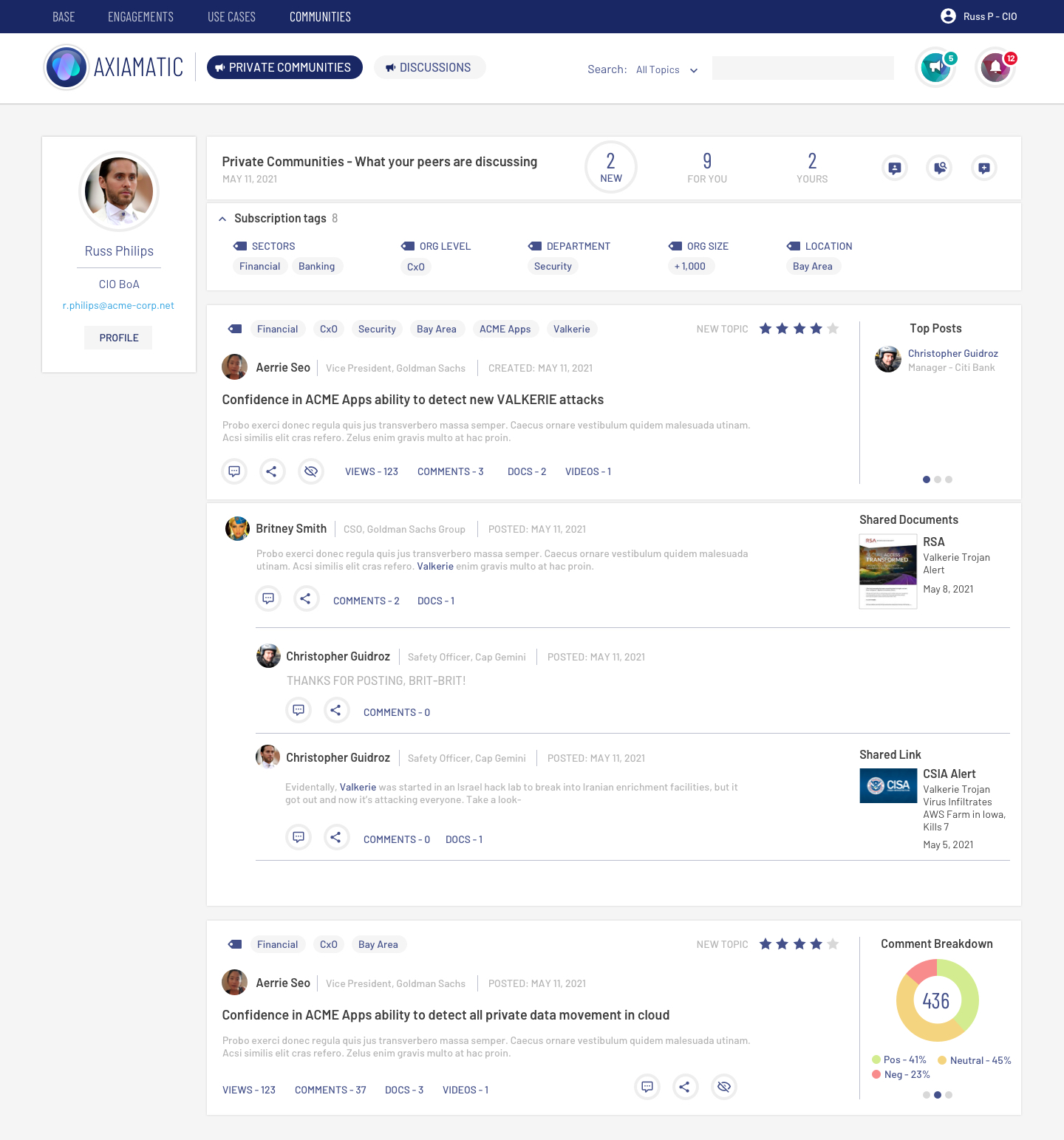
Axiamatic

Simplified Cloud Infrastructure in Silicon Valley

Client:
Enterprise Software
Role:
Lead UX / UI Partner
Tools Used:
Sketch, Axure, Zeplin, Svgator, Google Docs
Year:
2021

Overview

Working directly with the founding team, we defined the core user experience and feature set for their Minimum Viable Product (MVP). By delivering a vision-driven prototype that combined technical depth with a premium aesthetic, our work played a critical role in the company’s ability to secure venture funding. We transformed "stealth-mode" ideas into a tangible product reality that resonated with both early customers and institutional investors.

In 2021, Axiamatic needed to bridge the gap between a complex backend and a market-ready product. The Leap Labs defined the initial MVP, creating a cohesive design system and a fully functional prototype. This design-led approach was instrumental in their successful funding round, providing the visual proof-of-concept necessary to validate the business model and accelerate their go-to-market strategy.
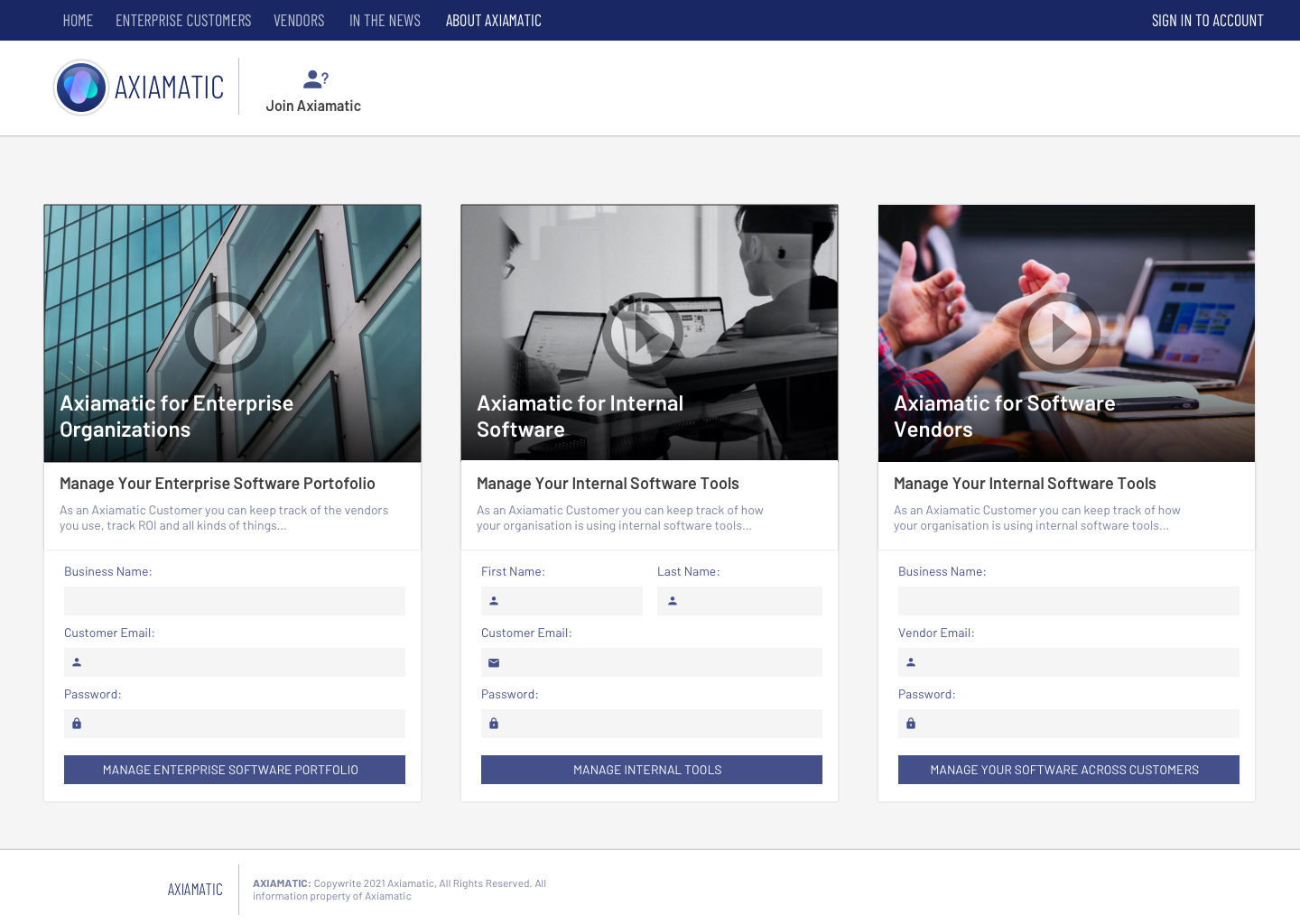
Standardizing Cloud Deployment

We designed the Service Catalog to act as a "Self-Service Portal" for developers. This allows teams to deploy pre-approved infrastructure templates (like a database or a web server) in minutes, ensuring consistency across the organization while maintaining security guardrails.

Design Focus: * Component-Based Architecture: Visualizing cloud resources as modular blocks.

Deployment Status: Real-time feedback on "Spin-up" and "Provisioning" phases.

Bridging the Gap Between Code and Visuals

  • A key challenge was representing Terraform or CloudFormation scripts visually. We created a "Visual Canvas" where users could see the dependencies between their cloud resources—such as how a Load Balancer connects to an Auto-Scaling Group—making it easier to spot configuration errors.
  • Design Focus:
    • Dependency Mapping: Visual lines showing data flow and resource connections.
    • State Management: Highlighting the difference between the "Desired State" and the "Current State" of the infrastructure.
  • Cost & Usage Observability

  • To combat "Cloud Sprawl," we integrated a cost-monitoring module. This dashboard allows managers to see the real-time cost of specific projects or environments, helping them identify orphaned resources or over-provisioned instances before the monthly bill arrives.
  • Design Focus:
    • Trend Analysis: Graphs showing spend versus budget over time.
    • Optimization Recommendations: AI-driven suggestions for downsizing underutilized instances.
  • Enterprise-Grade Security Management

  • For large-scale startups, security is paramount. We designed a granular permissioning system that allows admins to define exactly who can create, edit, or delete infrastructure. The UI focuses on Policy-as-Code, making complex permissions easy to audit.
  • Design Focus:
    • Permission Matrices: A clear table view for managing user roles across multiple cloud accounts.
    • Audit Trails: A chronological log of every infrastructure change, providing accountability.